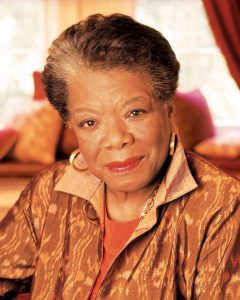
Maya Angelou – A Literary Icon and Voice of Black History
Maya Angelou (born Marguerite Annie Johnson)
Broke Ground in Literature and Memoir
Maya Angelou (born Marguerite Annie Johnson, April 4, 1928 – May 28, 2014) was an American poet, memoirist, educator, and civil rights activist whose work has had an enduring influence on Black history and culture. She used her voice to break barriers, confront oppression, and uplift marginalized communities, making her a quintessential figure to highlight during Black History Month.
Angelou’s first memoir, I Know Why the Caged Bird Sings (1969), was one of the first bestselling autobiographies by an African American woman—and remains a cornerstone in American literature. It was revolutionary because Angelou candidly explored her own experiences of racism, trauma, and identity at a time when Black women’s voices were often ignored or silenced. This work opened doors for future generations of Black writers and memoirists.
Gave Words to the Black Experience
Angelou’s poetry and prose do more than tell stories; they gave voice to the struggles and resilience of African Americans. Poems like “Still I Rise” celebrate resistance against oppression and have become rallying cries in both literary and social justice circles. Her work reshaped how Black lives and Black womanhood were portrayed in mainstream literature.
A Trailblazer in Public Life and Performance
In 1993, Angelou became the first Black woman (and second poet overall) to recite a poem, “On the Pulse of Morning,” at a U.S. presidential inauguration (for President Bill Clinton). This powerful moment brought poetry, and the Black American story, into the heart of national celebration and recognition.
Maya Angelou’s life and works are central to understanding Black American resilience and cultural expression. She not only chronicled the Black experience in her writing but also symbolized the strength, dignity, and creative force of Black women. Through her art and activism, she inspired generations to confront injustice and celebrate Black identity, a legacy that resonates especially during Black History Month.